HD School Landscape Renovation, Beijing

For many schools, the question of "how to create an international campus" is a common source of confusion. The core of an international campus landscape is to serve "human interaction and growth," rather than mere visual decoration. This is specifically embodied in four characteristics: participability, cultural compatibility, human-centric comfort, and naturalness. Here, the landscape is not about piling up symbols, but about allowing the international education philosophy of "openness, interaction, and integration into life" to take root naturally.


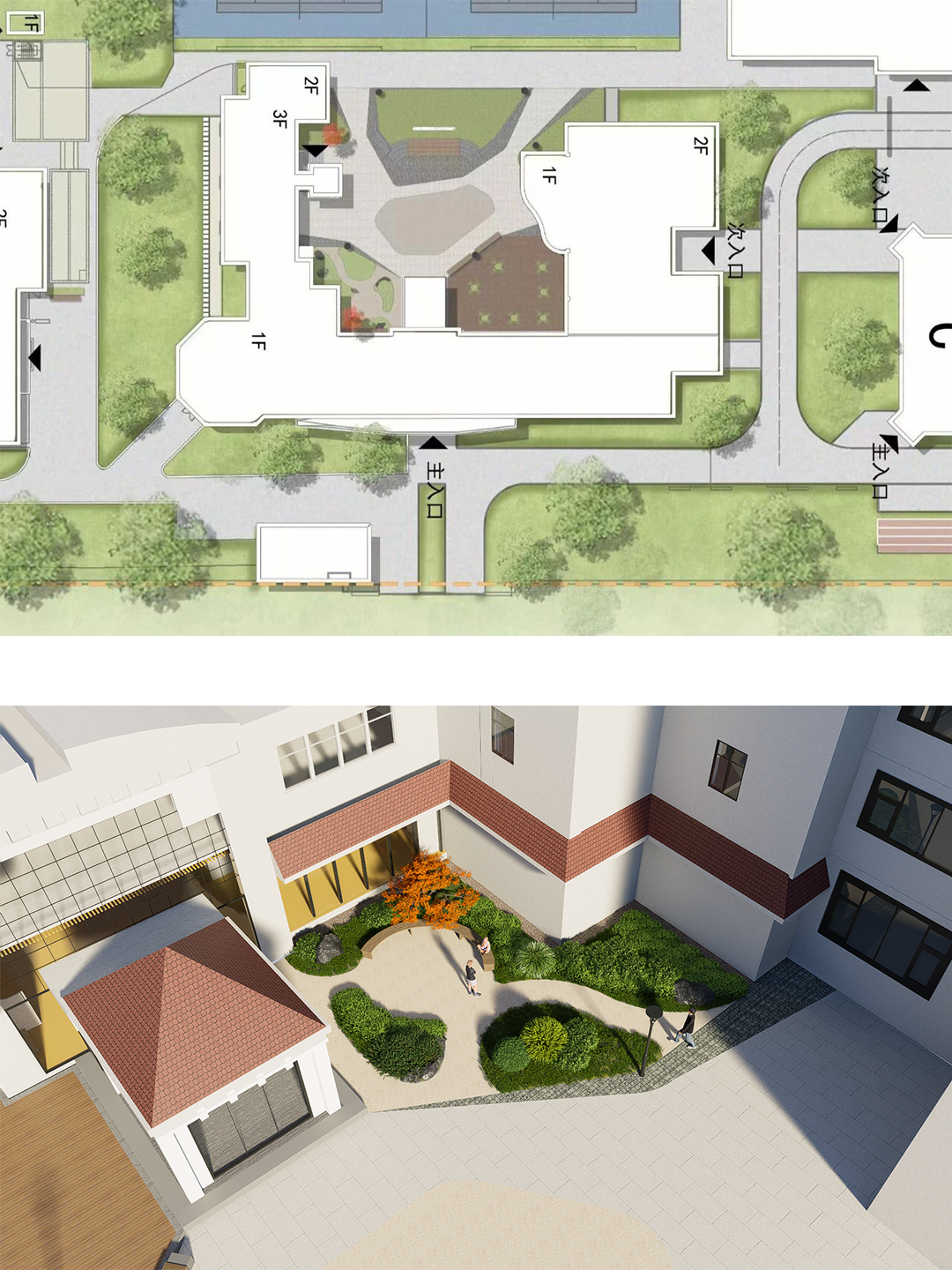
With "breaking boundaries" as the design DNA, it responds to the school's core educational mission of "cultivating global talents rooted in traditional Chinese culture, known for their discernment and earnestness." The first space after the main entrance (Central Teaching Building Plaza) serves as the perfect carrier for this practice: it is both the campus core and a functional hub where the cafeteria is located, with surrounding facilities supporting daily operations. It should ideally be the central space for teacher-student interaction.
Core Plaza:
A Participatory Interactive Space

We integrated "participability" into the design logic of the main plaza in front of the Central Teaching Building:


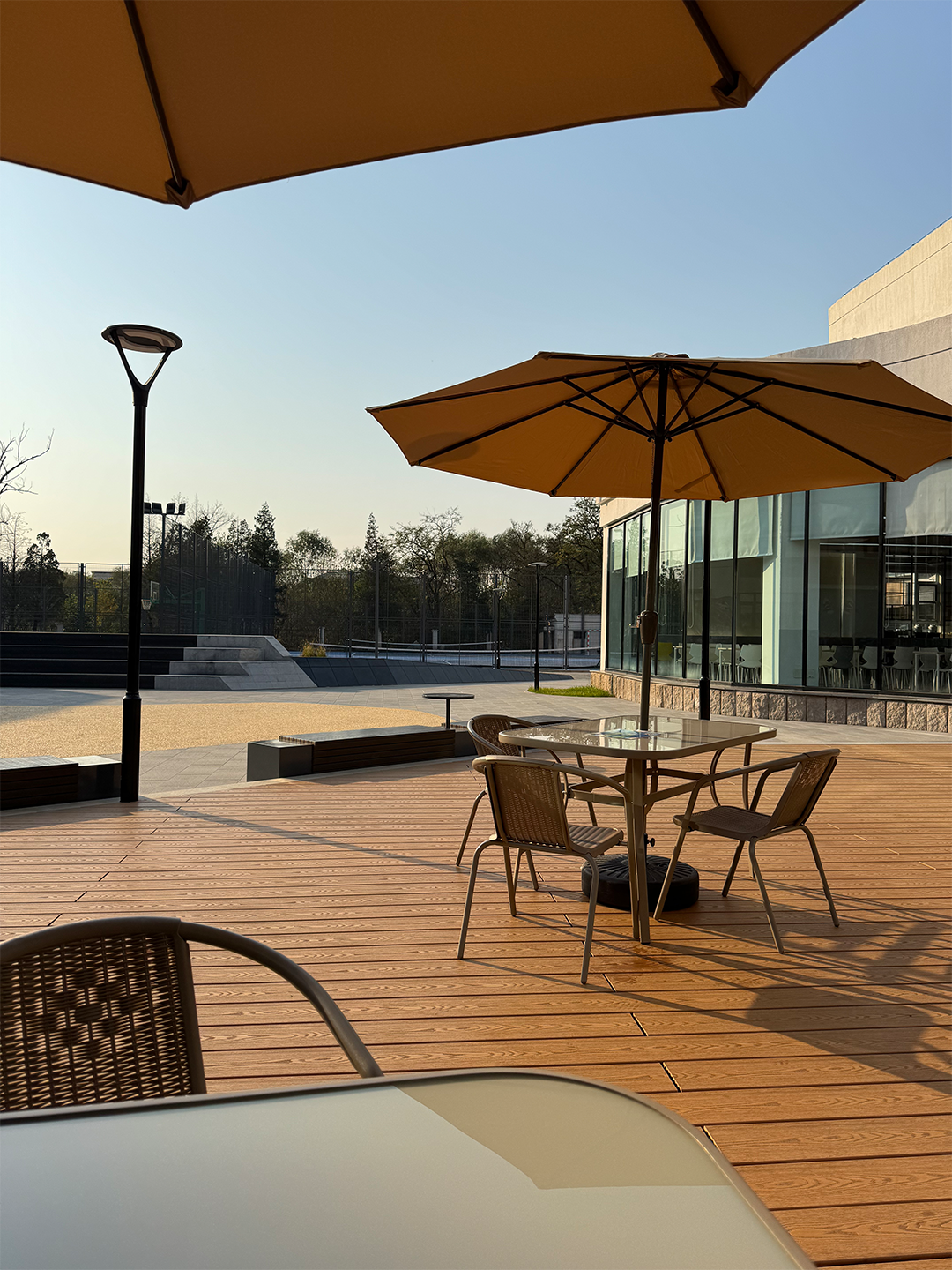
Three-Dimensional Interactive Steps: The original pond was removed to create three to four tiers of geometrically shaped steps. The stone steps feature light and dark color splicing to create a sense of angularity, while seamlessly integrating with the natural undulations of the adjacent grassy slopes (earthwork created to form multi-level terrain). This preserves the spatial transparency while transforming the steps into a gathering place for roadshows and group discussions.


Light Social Amenities: Outdoor tables and chairs, umbrellas, and leisure benches were added, allowing teachers and students to hold mini-roadshows or engage in casual conversations. Floor-to-ceiling glass windows connect the lounge, cafeteria, and walkways, fostering interaction between indoor and outdoor spaces. The once "isolated" plaza has become a vibrant core that links surrounding functions.

Blending Chinese and Western Elements:
Cultural Balance in the Courtyards

The essence of an international campus is "inclusivity and mutual learning." The design on either side of the main plaza embodies this "Chinese-Western integration":


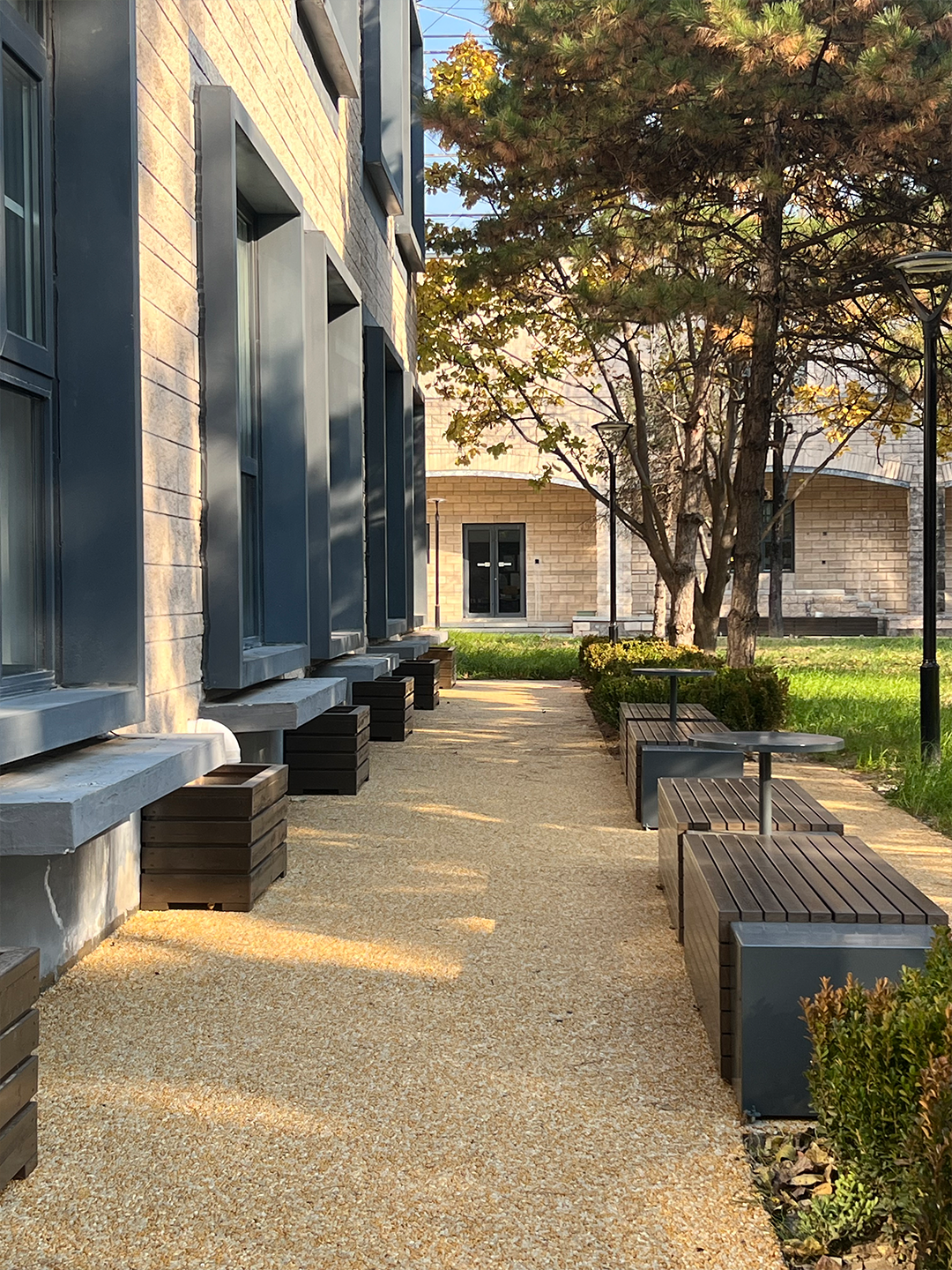
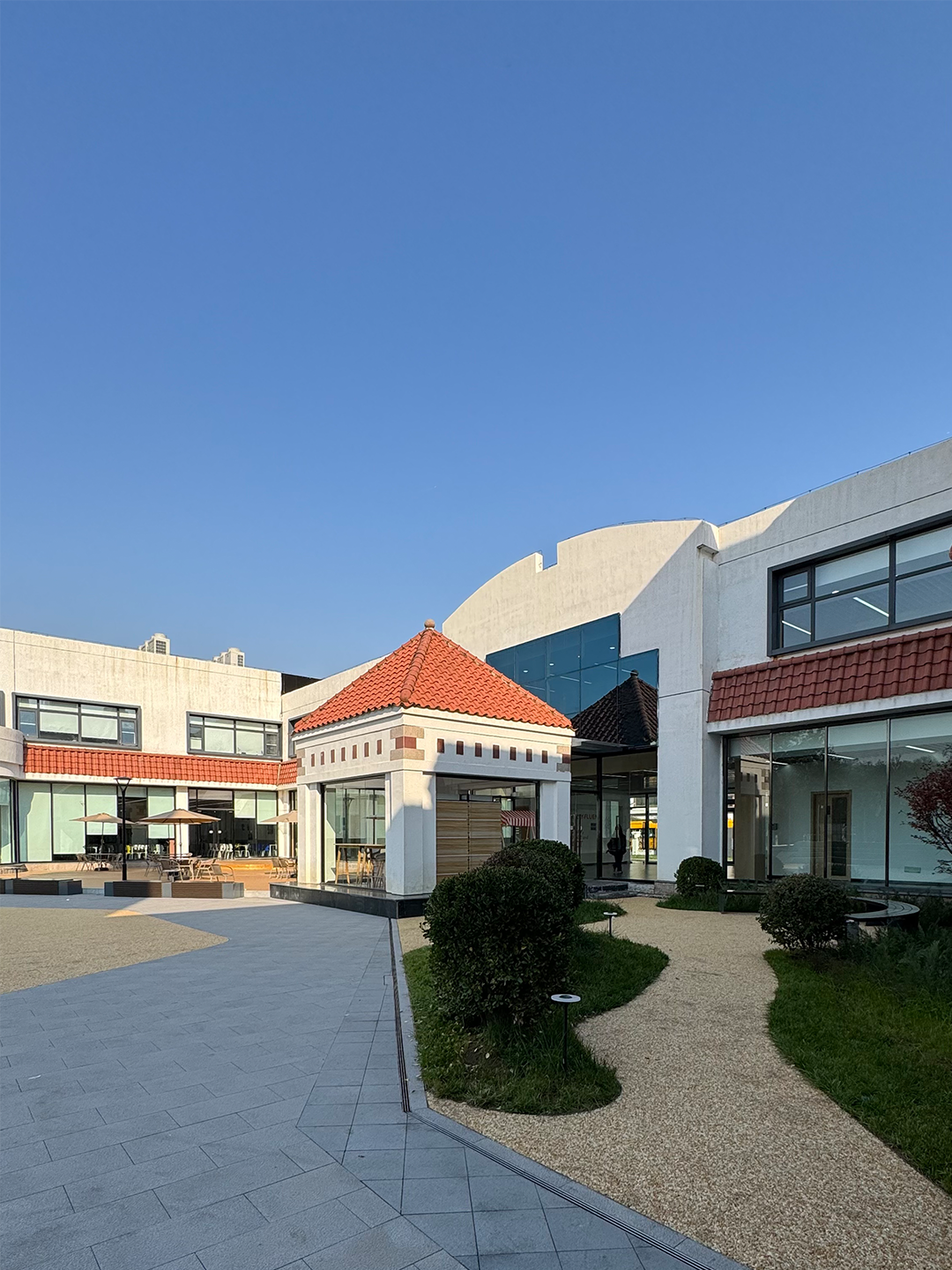
Tranquil Chinese-style Courtyard: On one side of the plaza (near the building's shaded corner), a winding path connects the planting to create a private, serene Chinese-style courtyard, suitable for solitude or light conversation.


Open Western-style Lounge Area: On the axially symmetrical other side of the building (near the cafeteria), an unobstructed Western-style open platform was created. This space is open with clear sightlines, perfectly suited for group interaction.


  The spatial layout, featuring one Chinese and one Western style flanking the central axis plaza, makes "integration" a natural attribute of the landscape.

Materials and Circulation:
International Texture in Details

An international landscape must balance "local relevance" with "user experience," which we achieved through detailed optimizations:


Contextual Material Application: Resin-bound gravel was used to mimic the texture of English country cobblestone paths, conveying a relaxed, international campus atmosphere.

Area: 3,000 sqm

Completion Date: 2025

Design Team: Fan Tie, Li Xiaoxue, Feng Ruiming,

Lai Yanbin, Li Lu, Wei Shiteng

Beyond traditional space:

environments for creativity and lifelong learning.

ATD

Discover exceptional living and commercial spaces with ATD, where architectural excellence meets modern functionality.

Join us in wechat

© 2026 ATD. All rights reserved.